Real Estate CRM vs. General CRM: Why Industry-Specific Wins
Part of our complete guide to real estate CRM software.
It’s a fair question, and plenty of agents ask it: why pay for a real estate CRM when general-purpose tools like Salesforce, HubSpot or even a free contact app already exist? On paper, a CRM is a CRM. In practice, real estate runs on a sales process that general CRMs simply weren’t built for, and the friction shows up fast. Here’s exactly how the two differ, why industry-specific tends to win and the honest cases where a general tool is still fine.
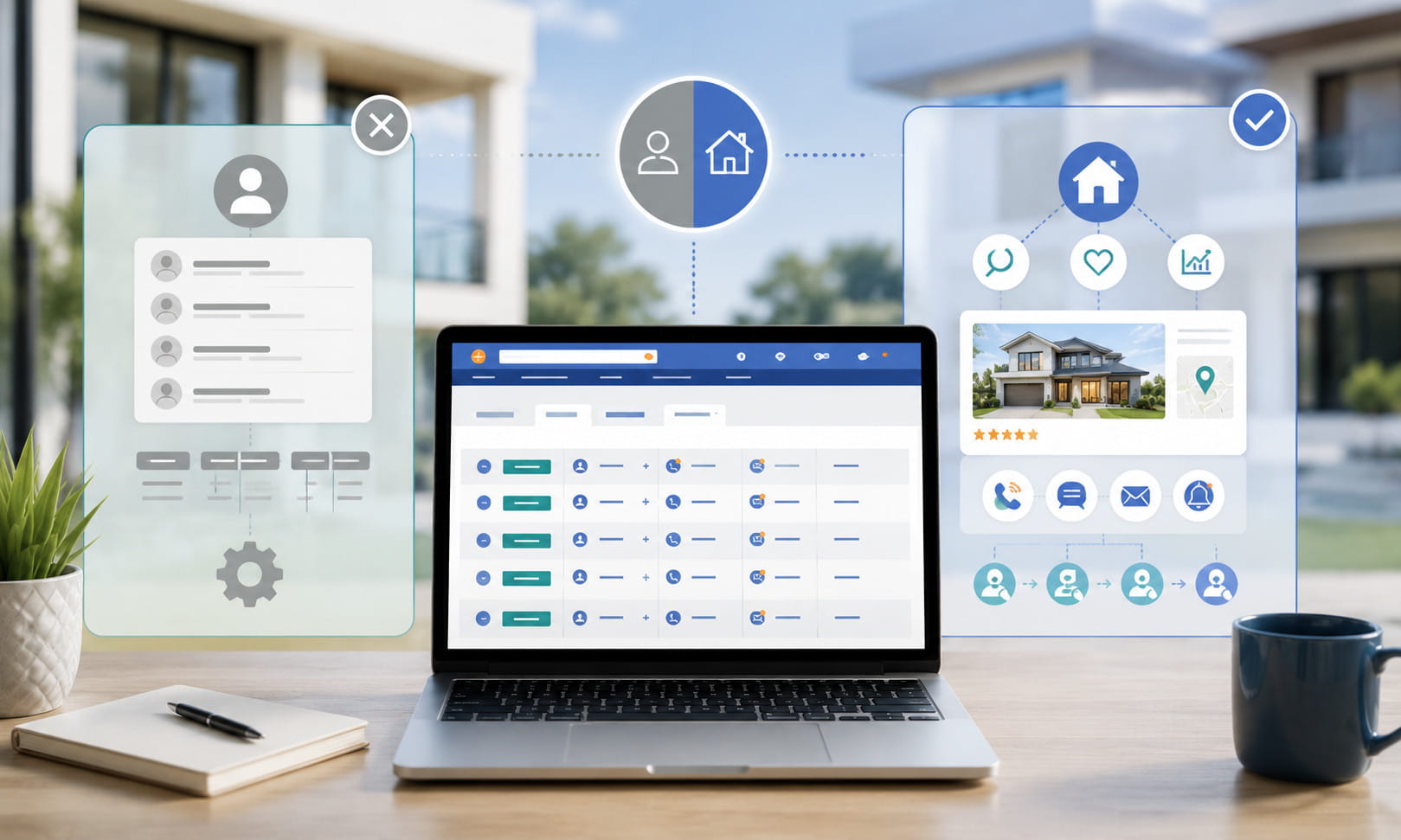
Quick answer: A general CRM is built around a generic sales funnel; a real estate CRM is built around how property deals actually happen. The decisive difference is that a real estate CRM connects to your MLS and IDX website, so it understands listings and lead behavior — and it’s built for the long nurture-to-referral lifecycle, not a one-time deal. For most agents and teams, that purpose-built fit beats a more powerful but generic tool.
The core difference: generic funnel vs. real estate lifecycle
General CRMs are designed for a broad B2B or B2C sales motion: a lead comes in, moves through a few stages and closes once. That model fits selling software or signing service contracts. It does not fit real estate, where the “product” is live MLS inventory, the buyer’s journey can stretch over a year of browsing and a closed deal is the beginning of a relationship that should produce repeat and referral business for a decade.
A real estate CRM is built around that reality. It speaks the language of listings, saved searches and home anniversaries. It assumes a long nurture, and it treats your past-client database as an appreciating asset rather than a list of closed-won deals to archive. That difference in design philosophy is what drives every specific advantage below.
Where general CRMs fall short
They don’t understand listings or MLS data
This is the big one. A general CRM has no concept of a property listing, an MLS or an IDX website. It can record that a contact is “interested,” but it can’t connect to your site to see that they viewed a specific three-bedroom twice this week and saved a search in a particular neighborhood. A real estate CRM tied to your IDX website sees all of that, and that behavioral data is what makes follow-up relevant instead of generic.
Their automation isn’t real-estate-aware
You can build automation in a general CRM, but you build everything from scratch, and it can’t trigger on real estate signals. A real estate CRM ships with templates and action plans written for agents, and it can fire follow-up based on property behavior, like a price drop on a saved home or a return visit after weeks of silence. In a general tool, those triggers don’t exist because the data behind them doesn’t exist.
They assume the deal ends at “closed”
General CRMs are optimized to move a lead to a sale and mark it done. Real estate runs on the opposite assumption: the years after a closing are where repeat and referral business lives. A real estate CRM is built to keep nurturing past clients automatically – the long game a generic deal-funnel tool tends to drop.
They make you build (and maintain) everything
A general CRM is a blank, powerful platform, which means you, or a consultant you pay, must configure it into something that works for real estate. That’s time, money and ongoing maintenance. A purpose-built real estate CRM works seamlessly for the workflow out of the box, with lead capture, routing, and follow-up already tailored to how agents work.
Side-by-side comparison
| Capability | General CRM | Real estate CRM |
| Listing & MLS data | Not aware of it | Tied to IDX / listing activity |
| Lead behavior | Generic page tracking | Property views, saved searches |
| Follow-up content | You build everything | Real-estate templates & e-alerts |
| Automation triggers | Calendar / generic events | Behavioral, property-based |
| Lifecycle | One-time deal funnel | Long nurture + repeat/referral |
| Lead routing | Manual or custom-built | Built in (geography, price, round-robin) |
| Setup effort | Heavy customization | Works for the workflow out of the box |
| Support | Generic | Real-estate-specific |
When a general CRM might still make sense
To be fair, industry-specific isn’t always the answer. A general CRM can be a reasonable choice if you’re a very small operation already living inside a tool like HubSpot for other parts of your business, if you generate almost all your business by referral and barely touch online leads, or if you have genuinely unusual workflow needs and the technical resources to build and maintain a custom setup.
The catch is that these situations are narrower than they look, and the “we’ll just customize a general CRM” plan tends to cost more time than it saves once real lead volume arrives. For the large majority of agents and teams that receive leads online and need to follow up consistently, converting a general CRM into a real estate-specific CRM is the long way around.
The cost of choosing wrong
One more practical point: switching CRMs later is painful. Migrating a database, rebuilding automations and retraining a team is real work, and it’s the kind of project agents put off for years. That’s an argument for choosing the tool that fits your actual business now. Our complete guide to real estate CRM software walks through how to evaluate that fit, rather than defaulting to the most familiar or cheapest option, because the cost of a mismatch isn’t just monthly fees, it’s the deals that leak while you’re wrestling a generic tool into a shape it was never meant to take.
Frequently asked questions
Can I use Salesforce or HubSpot for real estate?
You can, but you’ll spend significant time and often money customizing it, and it still won’t natively understand listings, MLS data or IDX behavior. Some teams with technical resources make it work. Most agents find a purpose-built real estate CRM gets them there faster with less effort.
What’s the main difference between a real estate CRM and a general CRM?
A real estate CRM connects to your MLS and IDX website and is built for the long real estate lifecycle, so it tracks property behavior and automates relevant follow-up. A general CRM is built for a generic sales funnel and has no native concept of listings or property search.
Is a real estate CRM worth it over a free general CRM?
For anyone generating online leads, usually yes. The free tool’s cost shows up later as time spent customizing it and as leads that leak because the follow-up isn’t real-estate-aware. Free isn’t free if it costs you deals.
When does a general CRM make sense for an agent?
Mainly for very small, referral-only practices, agents already embedded in a general tool for other reasons, or teams with unusual needs and the resources to build a custom configuration. Outside those cases, industry-specific usually wins.
Which one is right for you?
The honest answer depends on your business, but for most agents and teams who generate leads online and need consistent follow-up, a real estate CRM’s purpose-built fit beats a more powerful but generic tool. To see what that fit actually includes and how to evaluate your options, read our complete guide to real estate CRM.