How to Use Your CRM as a Real Estate Lead Generator

With the real estate industry evolving at such a rapid pace, staying ahead requires not only traditional skills but also leveraging advanced technologies. That’s where Customer Relationship Management (CRM) platforms come into play. They are no longer just digital address books; they are sophisticated tools that can transform your real estate lead generator.
In this blog, we’ll explore how real estate teams can use their CRM as a powerful real estate lead generator. Buckle up – you’re about to take your lead generation game to the next level.
Why Lead Generation is Essential in Real Estate
Lead generation is the lifeblood of any successful real estate team. It’s not just about collecting names and numbers, it’s about connecting with potential clients who are genuinely interested in what you have to offer. High-quality leads translate into higher conversion rates, better customer relationships and ultimately, more sales. Without a steady influx of leads, even the most talented real estate teams will struggle to close deals.
How CRMs Facilitate Effective Lead Generation
A real estate CRM can serve as the foundation for an effective real estate lead generator. These platforms store and organize customer data, but they also offer features to analyze this data and generate actionable insights. Modern CRMs, like Sierra Interactive, allow for smarter lead generation and management.
Strategies to Transform Your CRM into a Real Estate Lead Generator
Real estate teams can transform their real estate CRM into powerful lead generators by adopting several strategic approaches. Here’s how:
Leverage CRM Automation for Lead Nurturing:
Utilize CRM automation to create tailored follow-up sequences that nurture leads through their buying journey. Set up automated emails that provide valuable content and timely reminders based on lead interactions and preferences, ensuring consistent engagement without manual effort.
Integrate CRM with Marketing Tools:
Enhance your real estate lead generator by integrating your CRM with key marketing platforms such as social media, email marketing and MLS systems. This ensures seamless data synchronization, allowing you to capture leads efficiently and run coordinated marketing campaigns.
Use Data Analytics for Targeted Campaigns:
Exploit CRM analytics to gain insights into lead behavior and preferences. Use this data to design targeted marketing campaigns that resonate with specific audience segments, increasing your chances of lead conversion.
Optimize Contact Management:
Efficiently manage and segment your contact database within the CRM to deliver personalized communications. Implement a robust categorization system based on demographics, interests and engagement levels to ensure relevant messaging to each lead group.
Enhance Customer Engagement:
Foster deeper connections with potential clients by using CRM features such as personalized communication templates and integrated messaging tools. Track all interactions to maintain a comprehensive view of client history, which helps in delivering tailored experiences.
Implement Lead Scoring and Tracking:
Develop a lead scoring system within your CRM to prioritize high-potential leads. Assign scores based on lead actions, interest levels and readiness to transact. Use this system to focus your efforts on the most promising prospects, ensuring efficient resource allocation.
Continuous Optimization and Alignment:
Regularly review and adjust your CRM strategies to align with evolving business goals and market trends. Conduct periodic audits of your CRM processes and workflows to identify areas for improvement, ensuring your system remains a dynamic tool for your real estate lead generator.
By adopting these strategies, real estate teams can harness the full potential of their CRM systems to generate high-quality leads and convert them into loyal clients, driving business growth and success.
Maximize Lead Generation with Reverse Prospecting
What is Reverse Prospecting?
Sierra’s reverse prospecting tool is a game-changer for real estate teams, allowing you to unlock the power of your existing database. It flips the traditional model of prospecting on its head by matching potential buyers with specific listings based on their preferences and behaviors. This proprietary set of criteria and associated scoring system ensures that listings (including potential and featured ones) are perfectly matched with leads in your database based on Property Views and Search information. This means that agents can focus on serving clients and closing deals, rather than spending valuable time and resources on cold calling or generic advertising efforts.

Key Use Cases of Reverse Prospecting
- Enhanced Listing Appointments: When you attend a listing appointment, showing that you already have interested buyers adds immense value. It demonstrates that your existing lead set is robust and active.
- Property Outreach: Saved searches and e-alerts target individual leads. Reverse prospecting targets large sets of leads interested in a particular property, making it easier to close deals quickly.
Deep Dive into Lead Ponds
What are Lead Ponds?
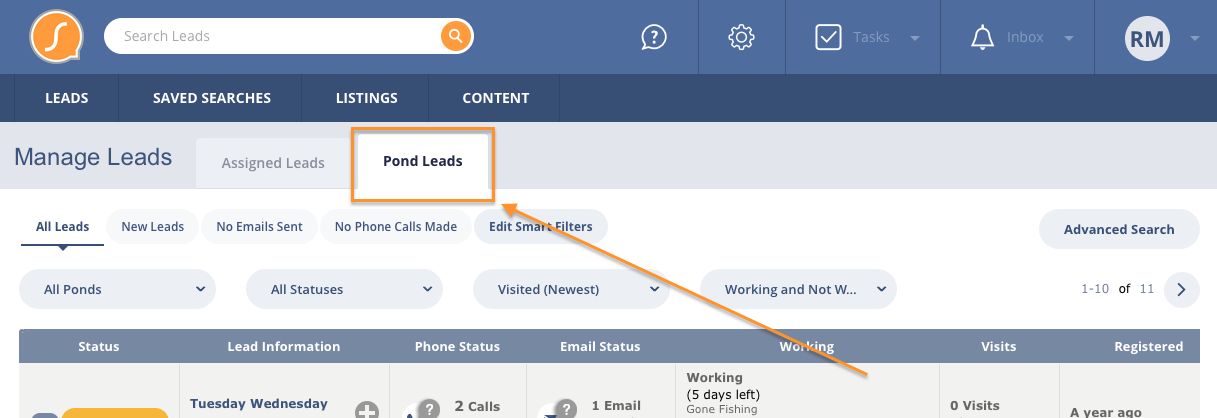
Sierra lead ponds is an innovative feature designed to manage both leads and teams efficiently. It allows agents to “work” leads before claiming them, ensuring that no lead goes unattended.
How It Works
- Centralized Repository: All leads are stored in a centralized pond, making it easy for agents to access and nurture them.
- Customization Options: Multiple customization options allow you to fit lead and team management to your business needs.
- Increased Efficiency: This feature reduces manual effort, enabling agents to focus more on revenue-generating activities.
Benefits for Real Estate Teams
Homestead & Co., led by Broker Owner Zach Sikes, made a strategic decision to switch to Sierra Interactive after learning about lead ponds. With Sierra’s lead ponds, Homestead & Co. unlocked a treasure trove of opportunity hidden within their real estate database.
“We have 30,000 leads in a pond right now. Those were all stuck inside of other agents’ pipelines. We have so much opportunity in here.”
The introduction of lead ponds gave Zach and his team access to low-hanging fruit with visibility to actions leads make on the Homestead & Co. website. His previous platform did not offer this feature where those leads were just sitting in his agents’ pipelines. Without lead ponds, these active leads on their website would be completely missed. By comparison, agents now can set filters in the lead pond, such as last lead activity date, to capitalize on leads already in the team real estate database. Agents can then “fish” from the pond and assign the leads to themselves so that the pond functions as a lead source for them.
These ponds act as a centralized repository for leads, allowing agents to access and nurture leads more effectively. By consolidating leads and providing agents with a centralized platform, Homestead & Co. has significantly decreased their cost per lead while maximizing the potential of their existing real estate database.
“If you look at the organic [lead volume] versus the PPC [lead volume], there’s the ability to have a lower amount of lead flow with the same effectiveness levels so we could spend less, because of the ponds. The ponds balance out however many leads an agent needs while running on a lower amount of spend.”
Homestead & Co. utilized Sierra Lead Ponds to uncover valuable opportunities hidden within their database. This led to a dramatic decrease in cost per lead and an increase in overall productivity.
Learn more about how “How Zach Sikes Turned His Real Estate Database into a Money Machine”.
Practical Tips for Using Your CRM as a Real Estate Lead Generator
Set Clear Goals
Before you start, it’s essential to set clear goals. What do you want to achieve? More leads? Higher conversion rates? Understanding your objectives will help you utilize your CRM effectively.
Segment Your Leads
Segmenting your leads based on criteria such as buying behavior, demographic data and engagement level allows you to tailor your approach. This increases the likelihood of conversion and improves customer satisfaction.
Check out Unearthing Hidden Leads in Your Real Estate Lead Database.
Automate Where Possible
Use the automation features in your CRM to streamline repetitive tasks. From sending follow-up emails to scheduling calls, automation can save you time and ensure that no lead falls through the cracks.
Integrate with Other Tools
Your CRM should integrate seamlessly with other tools you use, such as email marketing software and social media platforms. This creates a cohesive ecosystem that works together to generate and nurture leads.
Monitor and Adjust
Constantly monitor your CRM’s performance. Use analytics to understand what’s working and what’s not. Make adjustments as needed to optimize your lead generation efforts.
Avoiding Common Pitfalls
Overcomplicating the Process
One of the most common mistakes is overcomplicating the CRM setup. Keep it simple and user-friendly.
Neglecting Data Hygiene
Ensure that your data is clean and up-to-date. Inaccurate data can lead to missed opportunities and wasted effort.
Ignoring Customer Feedback
Always listen to customer feedback and use it to improve your CRM processes. This will help you better understand your leads and tailor your approach accordingly.
Conclusion
In today’s fast-paced real estate market, leveraging your CRM for lead generation is not just an option; it’s a necessity. From understanding reverse prospecting to utilizing innovative features like lead ponds, the potential for growth is immense. By setting clear goals, segmenting your leads, automating tasks and constantly monitoring your performance, you can transform your CRM into a powerful lead-generating machine.
Are you ready to harness the power of your CRM for sustainable growth? Sign up for a demo of Sierra Interactive today and see how it can revolutionize your real estate business.
Frequently Asked Questions About How to Use CRM as a Real Estate Lead Generator
How can I integrate my CRM with other real estate tools to enhance lead generation?
Integrating your CRM with other real estate tools is crucial for streamlining operations and maximizing lead generation. Start by identifying tools you use frequently, such as MLS systems, email marketing platforms and social media. Look for CRM systems that offer native integrations with these platforms or support third-party integration tools like Zapier. This integration allows seamless data flow between systems, ensuring that you capture and manage leads efficiently. Additionally, ensure that your CRM can synchronize with your website, capturing leads directly from your landing pages or contact forms.
What are the best practices for using CRM automation to nurture real estate leads?
CRM automation is a powerful tool for nurturing real estate leads. Begin by setting up automated email sequences that provide valuable content based on the lead’s stage in the buying process. Use triggers based on lead behavior, such as clicking a link or visiting a specific page, to send personalized follow-ups. Automate reminders for follow-up calls or tasks, ensuring that no lead falls through the cracks. Regularly review and refine your automation workflows to align with evolving lead preferences and market trends.
How can I effectively segment my contacts within the CRM to target specific lead groups?
Effective contact segmentation in your CRM helps you target the right audience with tailored messages. Start by categorizing contacts based on key criteria such as location, buyer/seller status and property preferences. Use tags and custom fields to identify specific interests or engagement levels. Leverage CRM analytics to refine segments further, focusing on behavior patterns and conversion likelihood. Regularly update and clean your contact list to maintain accuracy and relevance in your segmentation strategy.
What strategies can I implement in my CRM to prioritize high-quality leads?
Prioritizing high-quality leads involves setting up a scoring system within your CRM. Assign points to leads based on criteria such as engagement level, property interest, budget and readiness to buy or sell. Use these scores to focus your efforts on leads with the highest potential for conversion. Automate alerts for leads that reach a certain score threshold, ensuring timely follow-up. Additionally, leverage CRM analytics to identify patterns or attributes common to high-quality leads, refining your scoring model over time.
How does the CRM help in tracking the performance of my real estate lead generator campaigns?
A CRM helps track lead generation campaign performance by providing detailed analytics and reporting features. Utilize dashboards to monitor key metrics such as conversion rates, lead sources and engagement levels. Analyze data to identify successful channels and campaigns, adjusting your strategy as necessary. Set up automated reports that provide insights into your campaigns’ effectiveness over time, enabling you to make informed decisions about where to allocate resources and focus your marketing efforts.
What are the common challenges in using a CRM for real estate lead generation, and how can I overcome them?
Common challenges include data entry errors, integration issues and underutilization of CRM features. Overcome these by providing comprehensive training for your team, focusing on data accuracy and effective use of CRM functionalities. Choose a CRM that offers robust integration capabilities with minimal technical barriers. Regularly review your CRM processes to identify bottlenecks or areas for improvement, ensuring that your system evolves alongside your business needs.
How can I customize my CRM to better align with my real estate business goals?
Customizing your CRM begins with aligning its features with your business objectives. Use custom fields and tags to track specific data points relevant to your market. Set up personalized dashboards that highlight key performance indicators (KPIs) aligned with your goals, such as lead conversion rates or average deal size. Customize workflows and automation rules to reflect your business processes, ensuring that your CRM supports your unique operational needs.
What data management techniques should I use in my CRM to maintain accurate and up-to-date lead information?
Effective data management involves regular data audits, duplicate detection and data enrichment. Schedule routine reviews to verify the accuracy of lead information and remove outdated entries. Implement duplicate detection tools to identify and merge duplicate contacts, ensuring a clean database. Use data enrichment services to supplement missing information, providing a comprehensive view of each lead. Establish clear data entry guidelines for your team to maintain consistency and accuracy.
How can CRM analytics improve my understanding of lead behavior and conversion rates?
CRM analytics provide insights into lead behavior by tracking interactions, engagement patterns and conversion paths. Analyze these metrics to identify trends and behaviors that correlate with successful conversions. Use segmentation analysis to understand which lead groups are most responsive to specific campaigns or touchpoints. Leverage predictive analytics to forecast conversion probabilities, allowing you to focus resources on high-potential leads and optimize your marketing strategies accordingly.
What CRM features are essential for managing follow-ups and staying engaged with potential real estate clients?
Essential CRM features for managing follow-ups include task automation, reminders and communication tracking. Use automated workflows to set reminders for follow-up calls or emails, ensuring timely engagement. Track all interactions with leads, including emails, calls and meetings, to maintain a comprehensive view of your communication history. Utilize integrated communication tools, such as email and SMS, to streamline client interactions, ensuring you stay connected with potential clients throughout their buying or selling journey.
Thinking of switching CRMs? Check out our article for choosing a real estate CRM.
Author

Related Posts

Real Estate Business Planning