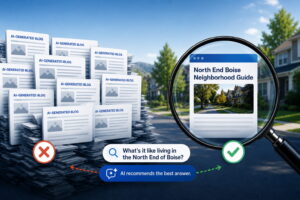
Understanding SEO For Real Estate: Why It’s Crucial For Lead Generation

Real estate professionals often invest time and money in paid ads (e.g., PPC) or referrals. This is common because it can work. However, many overlook one of the most effective long-term tools for lead generation: SEO.
SEO, or Search Engine Optimization, involves refining your website’s presence in search engine results such as those on Google. The goal is to attract free, organic traffic from people already searching for what you offer.
This post breaks down what SEO means for real estate, how it works, and why it’s a foundational strategy for bringing consistent, high-quality leads online. If you’re serious about building a lead pipeline that grows over time, keep reading.
What Is Real Estate SEO?
Real estate SEO helps your website appear when people search for homes, agents or local real estate services online. It’s more than just using the right keywords.
You’re building a site that search engines can understand and people trust enough to click.
There are three main areas to focus on:
- On-page SEO: This involves optimizing your website’s content and strategically using keywords. It also refers to elements like headings, meta descriptions and internal linking that help improve both clarity and relevance.
- Off-page SEO: This is where you solidify your place in the industry; you’re building credibility. Earning links from other trustworthy websites, getting mentioned online and gathering reviews all strengthen your authority.
- Technical SEO: Your site needs to work smoothly. Fast load times, mobile compatibility and clean site structure all help search engines crawl and index your pages.
Combined, these factors enhance your visibility, build trust and gradually attract more traffic.
Why Is SEO Essential For Generating Real Estate Leads?
What’s the first thing you do when you need a service provided? That’s right, you turn to Google. Buying or selling a home is no different; most people start their process by searching online.
They look for listings, agents or answers to questions like “best family neighborhoods in Denver” or “The Ultimate Guide to Moving to Charlotte.”
When your site appears on the first page, you instantly gain more visibility and trust from your potential clientele. That trust leads to clicks, and those clicks turn into leads.
These are not just ordinary leads. People who find you through organic search are often more motivated because they are actively looking and usually closer to making a buying or selling decision.
Those are the leads that convert.
Long-tail keywords make all the difference in real estate SEO. Large sites like Zillow tend to rank for broad city searches. Competing directly is tough, but that’s not the goal, now, is it?
Instead, focus on specific, high-intent search phrases such as:
- “Luxury homes in Green Hills, Nashville”
- “Best neighborhoods in Plano, Texas”
- “Townhomes near Downtown Sarasota”
These keywords may attract fewer searches, but the people behind them are more likely to take action.
The Core Components Of Real Estate SEO
Real estate SEO is not one strategy; it’s a system built on content, structure and, of course, consistency. Let’s take a look at the pieces that matter.
1. On-Page SEO: Where Visibility Begins
This is where you shape the experience for both users and search engines.
You need to focus on:
- Strong title tags and headers
- Clear keyword use throughout your content
- Internal links that guide people to blog posts, listings or neighborhood pages
The most effective strategies center on long-tail and local keywords. Instead of trying to compete with broad search terms like “homes for sale in Austin,” you can target what buyers are looking for.
For example:
- “Buying a condo in Portland”
- “Three-bedroom homes in South Tampa”
- “Mid-Century modern homes in Fort Worth”
Pages like these match user intent and often convert better. You can also use a sidebar navigation to connect related content and improve internal linking. That structure makes it easier for search engines to understand your site and easier for users to stay engaged.
Now, that is smart SEO for area pages in action.
2. Technical SEO: A Strong Site Foundation
A fast site that works well on mobile is the starting point. From there, it’s all about getting the technical pieces just right.
Here is what that includes:
- A sitemap that tells search engines where your key pages live
- Schema markup that helps Google understand your content and display listings better
- Crawlability that ensures your pages can be found and indexed in search engines
Beyond the technical metrics, you also need to look at your content through the lens of Google’s E-E-A-T framework. Understanding how E-E-A-T impacts real estate SEO means assessing your content for experience, skill, authoritativeness and, as always, trust.
These signals shape how your pages rank and how users perceive you.
3. Content Strategy: Build Authority Through Value
The best SEO content is helpful. It’s not about hitting a word count or stuffing in keywords, it’s about answering real questions and showing real knowledge.
You can do that through:
- Blogging on a regular schedule
- Creating neighborhood guides and area pages
- Writing FAQs that answer what buyers and sellers are asking
Helpful content shows users that you know what you’re talking about. Some ways to earn client confidence include being transparent, offering consistent updates, sharing personal insights and showing just how well you know your local market.
You should also ensure that you create evergreen content that stays relevant over time.
Examples of evergreen content include:
- “Affordable Towns Near Boulder, CO: Get More, Pay Less in Cities Near Boulder”
- “How To Choose The Right Nashville, TN Home For Your Family”
- “The Ultimate Neighborhood Guide To Ridglea Hills, Fort Worth“
- “Ocean City Zip Codes: The Ultimate Guide“
- “The Ultimate Guide To Living In Niagara Falls, Ontario“
This type of content brings in consistent traffic and positions you as a reliable resource. And when you take the time to learn what works, you are not just publishing articles, you are maximizing your blog post’s impact and turning helpful information into qualified leads.
Sierra Interactive helps you facilitate content that attracts attention, fosters trust, boosts traffic and supports sustainable growth.
Local SEO – A Must For Real Estate Agents
Local SEO focuses on improving your website and online presence so it shows up when people search for real estate services nearby. Since location is a major factor in these searches, having strong local visibility is essential.
What does this mean, exactly? Well, when someone looks for an agent nearby, search engines show results based on relevance and location. Without local SEO, you miss valuable leads.
Key components of Local SEO include:
- Google Business Profile: Set up, confirm and fully complete your business profile. Include details like your services, hours of operation, business categories and a clear overview. Update photos regularly and ask clients to share their feedback through reviews.
- Local Citations for Real Estate SEO: Local citations are mentions of your business name, address and phone number on other websites. These citations build your authority and help search engines trust your presence. Consistency across citations matters a lot.
- Local Directories: Platforms like Yelp and Realtor.com provide important citations and improve your visibility. Ensure your information is accurate and consistent everywhere.
- Review Signals: Having more reviews with recent, relevant keywords helps your rankings. Ask clients to mention neighborhoods or property types they worked with you on.
- NAP Consistency: Your name, address and phone number must be the same on all listings. Even small differences can hurt your search rankings. Don’t get caught by such a little detail.
Local SEO is necessary for connecting with potential clients nearby. We assist agents in enhancing their local visibility through optimized listings, positive reviews and effective local citation techniques that deliver results.
Link Building – The Secret To SEO Growth
Backlinks are links from other websites to yours. They show Google that your site has, you guessed it, authority and trust. This helps boost your rankings.
But be careful, not all backlinks carry the same weight. Focus on links that come from quality, relevant and authoritative sources.
Here are some great link sources for real estate agents:
- Local sponsorships
- Local news stories
- Guest blogs or interviews
- Real estate directories
Avoid spammy or purchased links. They can hurt your SEO instead of helping.
Link building is essential for real estate websites because it drives organic growth and improves your online reputation. When trusted sites link to you, it signals to Google that you are a reliable resource on the subject and subsequently helps to increase organic rankings.
How To Measure SEO Results
Using the right tools helps you track how well your SEO efforts are paying off. Google Analytics is a must for monitoring your site’s traffic and user behavior. Keyword rank trackers show how your keywords perform over time.
Keep an eye on these important metrics:
- Growth in organic traffic
- Improvements in keyword rankings
- How long visitors stay on your pages and how often they leave without interacting
- Conversions coming from organic search users
It’s important to remember that SEO results don’t happen overnight. It often requires months to years of consistent effort to notice significant progress. When implemented properly, though, it can have lasting effects and consistently bring in new leads and clients.
Tracking these numbers regularly helps you adjust your strategy and keep moving forward with confidence.
SEO isn’t just a buzzword. It’s the foundation for real estate professionals who want to build a steady stream of serious leads. When you focus on the right strategies, your website becomes a powerful tool that draws in more visibility, better traffic and sustained growth that doesn’t rely on constant ad spend.
Keep in mind that while SEO takes time to gain traction, the payoff lasts. So, whether you’re just starting to explore SEO or ready to refine your approach, taking action now can set you apart from the competition. Sierra Interactive is here to guide you every step of the way, helping you turn your website into a lead-generating machine that works hard for you day after day.
Author

Related Posts

Real Estate CRM
Best Real Estate CRMs in 2026: An Honest...

Real Estate Business Planning