First Contact to Closing: Master Real Estate Lead Conversion

When it comes to real estate, leads are the foundation of success. Yet, many real estate teams struggle to consistently convert those leads into loyal clients and closed deals. The truth? Having inquiries pour into your pipeline is just the beginning. It’s what you do next that defines your success. Understanding the real estate buyer’s (or seller’s) journey, crafting tailored strategies and building meaningful relationships are crucial to effective real estate lead conversion. This guide will walk you through actionable strategies and best practices to ensure your hard-earned leads turn into long-term business success.
Understanding Real Estate Lead Conversion
What Is Real Estate Lead Conversion?
Real estate lead conversion is the process of turning potential clients (leads) into active buyers or sellers, and eventually into closed deals. However, it isn’t as simple as answering inquiries or sending occasional follow-ups. It requires understanding each lead’s unique goals, building relationships and guiding them strategically through their buyer’s or seller’s journey.
Conversion isn’t just about filling your calendar with client meetings—it’s about fostering trust and positioning yourself as the go-to solution for their real estate needs.
The Stages of Lead Conversion
Every lead goes through different stages before they’re ready to act. Understanding these stages is crucial to tailoring your approach.
- Awareness: The lead is researching and exploring options but isn’t ready to commit.
- Consideration: They’ve identified their needs and started evaluating potential agents or solutions.
- Decision: The lead is ready to take the next step—with the right guidance and insight from you.
By recognizing which stage your lead is in, you can provide the precise information or value they need to move forward.
The 5 Phases of Real Estate Marketing for Lead Conversion
A successful real estate marketing plan aligns with the buyer’s journey and ensures consistent engagement. Here are the five phases to perfect your conversion strategies:
Attract
- Build strong branding and an active digital presence through your website and social media.
- Use SEO-optimized blog posts and local property videos to draw organic traffic to your platforms.
Engage
- Start valuable conversations with leads. Respond to inquiries promptly and provide insights they can’t find elsewhere.
Nurture
- Share personalized campaigns, such as local market reports, tailored property recommendations or helpful checklists, to build trust and keep them engaged over time.
Convert
- Address any remaining hesitations. Offer timely solutions, such as virtual walkthroughs, detailed financial projections or lender introductions, to help close the deal.
Close and Delight
- Exceed expectations during and after the deal by offering exceptional service and thoughtful follow-ups.
Each of these phases is critical to maintaining a seamless client experience while maximizing your chances of success.
Lead Nurturing vs. Lead Converting
Nurturing a Lead
Lead nurturing is all about building trust and connection over time. These leads may not be ready to transact immediately, but keeping them informed will keep you top of mind.
Strategies for nurture success:
- Share regular, value-driven touchpoints through email campaigns.
- Provide market updates, neighborhood guides or insights into upcoming real estate trends.
- Use CRM tools to automate follow-ups while keeping the communication personal.
Converting a Lead
When a lead signals they’re ready to buy or sell, your focus shifts to converting them into a client. This is where proactive communication and tailored solutions carry more weight.
Strategies for conversion success:
- Schedule property tours or consultations swiftly after showing interest.
- Address specific needs or pain points directly in your conversations.
- Deliver on solutions with confidence, like providing tailored financing advice or connecting them with trusted vendors (inspectors, contractors, etc.).
Understanding the balance between nurturing and converting ensures sustained relationships while capitalizing on opportunities.
Key Strategies for Real Estate Lead Conversion
1. Respond Quickly to Inquiries
Studies show that responding to leads within the first five minutes increases conversion rates by over 300%. Implement automated responses or leverage CRM tools to engage promptly.
2. Qualify Your Leads
Not all leads will be at the same stage—or even have serious intent. Qualify them with questions about their budget, urgency and goals before investing significant time.
Sample Qualifying Questions:
- What’s your timeline for buying/selling a home?
- Do you already have financing in place?
- Have you worked with an agent before?
3. Personalize Your Communication
Avoid generic one-size-fits-all messaging. Speak to their specific goals. For example, if a lead is interested in downtown condos, share market insights and condo-specific listings.
4. Provide Valuable Content & Resources
By offering educational resources, like buyer’s guides, seller checklists or market trend reports, you position yourself as an authority figure they can trust.
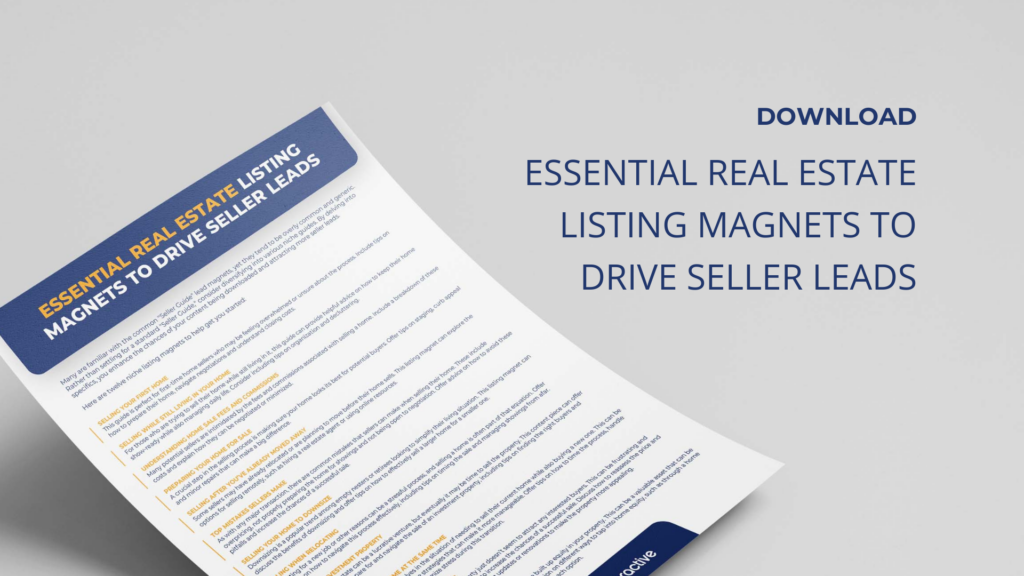
We’ve created a resource built to enhance the chances of your content being downloaded and attract more seller leads. It outlines a series of specialized real estate listing magnets designed to attract seller leads by addressing specific niches in the home selling process. Download the Essential Real Estate Listing Magnets To Drive Seller Leads for free.
5. Nurture Leads Through Targeted Campaigns
Use segmented email campaigns to target leads based on their behaviors or preferences. For example, send luxury home market insights to high-budget buyers, while first-time homebuyers benefit from mortgage breakdowns.
6. Engage Leads Through Multiple Channels
Don’t rely solely on email. Use social media, phone calls and text messaging to connect with leads on their preferred platforms.
7. Leverage Social Proof & Testimonials
Reviews and client success stories help build credibility. Share testimonials on your website or social media to showcase the trust past clients had in your services.
8. Continuously Refine Your Lead Conversion Process
Track data using CRM reports to analyze what works and improve on what doesn’t. A/B test different campaign strategies and adapt based on performance metrics.
What To Do (and Avoid) When You Get a New Lead
What To Do When You Get a New Real Estate Lead
- Respond immediately and acknowledge their interest.
- Send a friendly and informative message tailored to their inquiry.
- Schedule follow-ups to stay on their radar.
What Not to Do When You Get a New Real Estate Lead
- Don’t delay responses—this risks losing the lead to competitors.
- Avoid being overly pushy or aggressive.
- Stay away from generic communication that doesn’t address their specific needs.
What To Do After Converting a Lead into a Sale
Your job doesn’t end at closing!
- Check in with clients regularly.
- Share valuable referrals for contractors, movers, or interior designers.
- Turn happy clients into referral sources by keeping the relationship alive with holiday greetings or care packages.
Stronger Conversions for Long-Term Success
Real estate lead conversion is both an art and a science. It requires not only strategic planning but also genuine care for understanding your clients’ needs. By responding quickly, personalizing communication and utilizing targeted campaigns, real estate teams can strengthen their lead conversion processes, close more deals and build lasting relationships.
Take a moment to evaluate your current strategies. What’s working? Where could you improve? Implement some of the actionable tips shared here to elevate your real estate business today.
Want more tips like these? Explore additional resources and tools to perfect your lead conversion game!
Frequently Asked Questions About Real Estate Lead Conversion
Getting Started with Lead Conversion
What is the best way to qualify a lead in real estate?
To qualify a lead, focus on understanding their intent and ability to transact. Use the BANT framework (Budget, Authority, Need, Timing) to assess if they’re serious about buying or selling, financially ready and in the right timeline. Ask open-ended questions during conversations, such as “What has prompted you to consider buying/selling now?” This will help you understand their motivation and stage in the process.
How do I create a follow-up strategy for new leads?
Start by segmenting your leads into categories—for example, hot leads (ready to act soon), warm leads (interested but not urgent) and cold leads (long-term prospects). Develop a timeline for follow-ups based on their category. For example:
- Hot leads: Follow up within 24 hours, then every 2-3 days.
- Warm leads: Check in weekly or biweekly to maintain rapport.
- Cold leads: Send monthly updates to stay on their radar.
Integrate tools like a CRM to automate and track your follow-up sequences.
What common mistakes should I avoid when converting leads into clients?
Avoid these pitfalls:
- Neglecting to respond quickly (within the first 5-10 minutes for online leads).
- Using a one-size-fits-all communication approach.
- Failing to nurture leads who aren’t immediately ready.
- Over-communicating to the point of being pushy.
- Not asking for feedback or adapting based on a lead’s preferences.
How quickly should I respond to a lead for the best chance of conversion?
Respond within 5-10 minutes – this timing significantly improves conversion rates. The quicker you respond, the more likely it is that you’ll catch the lead while they’re still actively considering their options.
Are there specific scripts or templates I can use for initial outreach?
Yes, scripts can be very effective. For example, here’s a simple template for buyer leads:
Adapt the script to sound conversational and specific to your lead’s inquiry or interest.
- “Hi [Name], this is [Your Name] with [Your Agency]. I saw you were interested in [specific property area or type]. Do you have a few minutes to discuss your needs? I’d love to help you with your home search.”
Effective Communication Techniques
How do I tailor my communication approach to different types of leads?
Understand the lead’s preferred communication style and needs:
- For first-time buyers, focus on education and addressing fears.
- For investors, emphasize metrics like ROI or market trends.
- For luxury leads, highlight exclusivity and personalization.
Ask discovery questions like, “How do you prefer to communicate—phone, email or text?” to adjust accordingly.
How can I build trust with a lead during the initial conversation?
Be transparent, listen actively and provide value without pressuring them. For example, share insightful market data or tips that address their key questions. Avoid focusing only on your sales pitch. Highlight your expertise while showing genuine interest in their goals.
What are the best ways to handle objections or hesitations from leads?
Acknowledge their concerns, ask clarifying questions and provide solutions. For example, if a lead says, “I’m not sure if I can afford to buy now,” respond with, “That’s a valid concern. Would it help if I provided insights into current financing options or connected you with a trusted lender?” Address objections with empathy, not defensiveness.
How do I know when a lead is ready to move forward versus needing more nurturing?
Leads who ask detailed questions (e.g., specific property addresses, timelines, or financing options) are likely ready to move forward. Leads who stay vague or noncommittal may need more nurturing. Always ask direct questions like, “What’s your ideal timeline for making this decision?”
What role does social media play in engaging and converting real estate leads?
Social media helps you engage leads through relatable content. Highlight success stories, share educational posts on the buying/selling process or showcase listings. Build trust by responding to comments or direct messages quickly. Use platforms like Instagram and Facebook for personalized storytelling, which appeals to different demographic groups.
Follow-Up Strategies
How often should I follow up with a lead without appearing pushy?
Strike a balance by keeping communication consistent but not overbearing:
- Initial stage leads might need weekly updates.
- Warm leads could benefit from biweekly check-ins.
- Long-term leads might prefer monthly follow-ups.
- Respect a lead’s communication preferences—if they ask for less frequent contact, adjust accordingly.
What are the most effective follow-up methods (calls, texts, emails, etc.)?
Use a mix of communication methods to match the lead’s preferences:
- Call for warm, direct conversations.
- Text for quick, non-intrusive updates.
- Email for detailed information or scheduling purposes.
- Social media DM is effective for casual follow-ups when leads are younger or highly active on platforms.
What do I do if a lead goes cold after the initial contact?
Re-engage with value-driven communication:
- “Hi [Name], I thought you might be interested in this market insight/article.”
- Send updates on properties matching their interests or key industry news.
- If they remain unresponsive, consider retreating for a while, but leave the door open for future contact.
How can I maintain engagement with long-term or ‘not-ready-yet’ leads?
Use email drip campaigns that deliver regular market updates, tips for buyers/sellers and personalized insights. Offer helpful resources like “how-to” guides or checklists tailored to their stage in the process.
When is it appropriate to stop pursuing a lead and focus on others?
If a lead consistently ignores communication for 6-12 months despite multiple attempts, it might be time to deprioritize them. However, keep them in a CRM for occasional re-engagement opportunities, like holiday greetings or market updates.
Measuring Success
What metrics should I track to gauge the success of my lead conversion efforts?
Track:
- Conversion rate (leads-to-clients).
- Average response time.
- Engagement rates (email opens/calls answered).
- ROI on paid lead sources or campaigns.
How do I calculate my lead-to-client conversion rate?
Divide the number of clients secured by the number of leads generated, then multiply by 100. Example:
- 20 clients ÷ 200 leads × 100 = 10% conversion rate.
What can I learn from analyzing leads that didn’t convert?
Identify patterns—did these leads lack urgency, fit your target demographic or face consistent objections? Use these insights to adjust your pipeline strategy or messaging.
How do I identify bottlenecks in my lead conversion process?
Use metrics (e.g., abandoned follow-ups or missed response times) to find weak points. Analyze feedback to determine if communication methods or lead qualification needs improvement.
What benchmarks should I aim for in terms of lead conversion performance?
Industry average conversion rates range between 1-5%, but well-optimized processes can achieve 10-15%.
Author

Related Posts

Real Estate CRM
Best Real Estate CRMs in 2026: An Honest...

Real Estate Business Planning